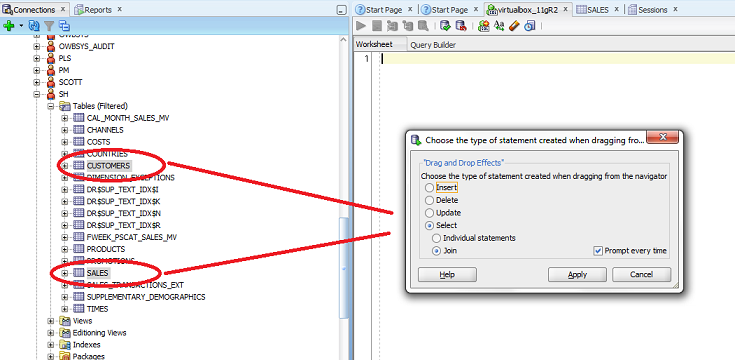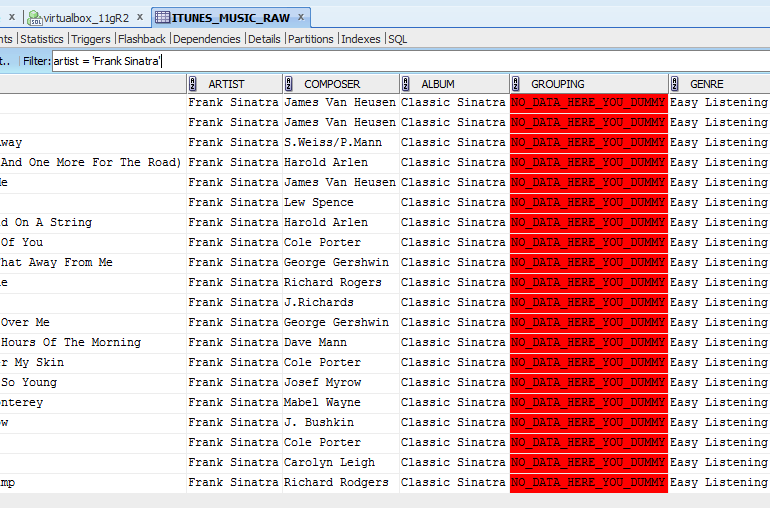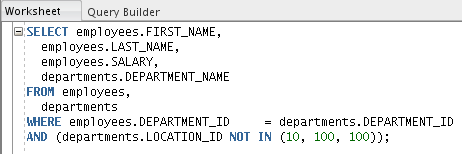


Are you sick and tired of playing with the same sample data? Do you shudder at even the mention of the name, ‘Scott?’ First of all, if you’re still using SCOTT, you should try out HR instead. And if you want some beefier tables and need to experiment with partitioning, then SH is the way to go. But eventually you will get to the point where if you see another SALARY or DEPTNO in a…
There’s a lot of confusion out there about the absence of a value, also known as NULL. It can cause havoc with your queries if you don’t account for it. Some folks confuse it with a blank space in a string. At least SQL Developer can make one thing a bit easier, interpreting NULLs in a data grid. By default when SQL Developer displays data in a grid, it indicates NULL with {null}. I’m a…
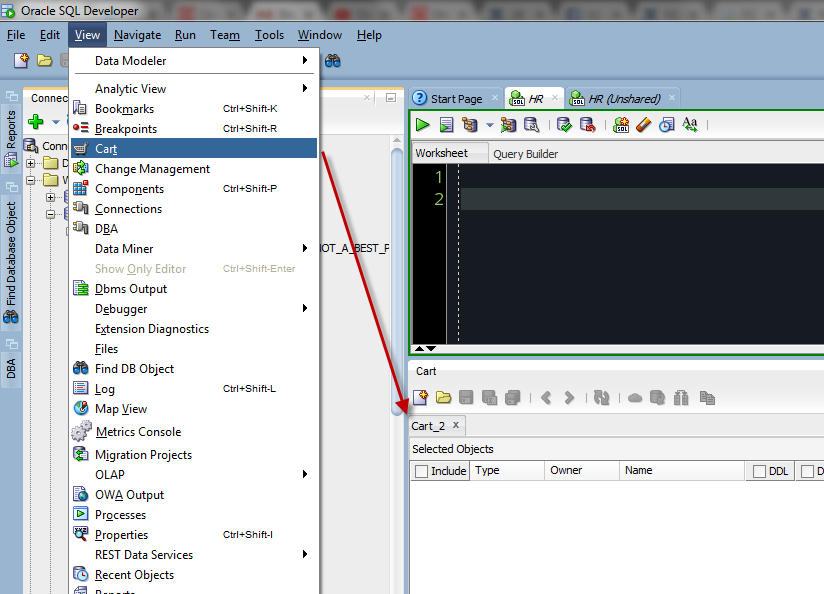
Just in time for the upcoming holiday shopping season, SQL Developer v3.1 (now available as an Early Adopter release), allows the developer or DBA to build ad-hoc deployment scripts. Need to ‘order’ that list of objects and underlying data for your test environment? Just add them to your cart and you’re ready for check-out! Once connected to 1 or more instances, you can use SQK Developer to pull selected objects from multiple databases into a…
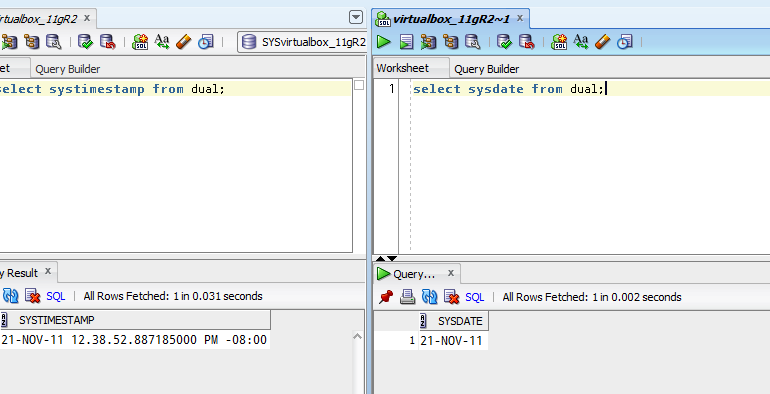
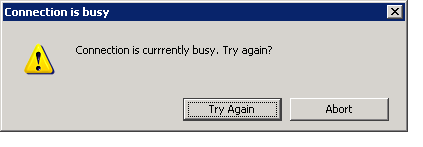
Got a great question off the Twitter-verse this morning from @ApoloDuvalis “..in SD (SQL Developer) you cannot use the same connection in a different command window until the busy command is done or aborted.” I know many of you aren’t familiar with queries that take so long to run that you have to wait on them, but believe me, they are out there! Anytime I need a query that takes more than a few seconds…
Oracle SQL Developer is made available to you for free, and is chock-full of features for the developer, DBA, or data-junkie. We do our best to give you everything you need to be successful in your job, but also recognize that we can’t do EVERYTHING. While SQL Developer is NOT an open-source project, it does provide a framework that allows for other developers to build their own plug-ins. Don’t know Java? No problem, you can…
It’s very rare that a query is developed in a single take. You start with a framework, and then trim down to the essential elements. Then you start working about sort orders, performance, and formatting. As you develop your SQL, you may want to keep several iterations of the data and their plans available. SQL Developer’s Worksheet allows you to ‘pin’ the Query Results, Explain Plan, and AutoTrace panels. While pinning the Query Results panel…
I was perusing the SQL Developer Feature Requests Exchange and was not surprised to see this – a request to have the Query Builder disabled. My favorite (and most predictable) comment among the voters for this request is something along the lines of ‘feature totally useless for us professionals’ Let’s explore that for a second. First of all, I’m not judging this user’s point of view. It’s probably quite prevalent amongst the experienced database folks…
It’s amazing how the ‘little things’ can often make the biggest impact on the end user experience. Example: when you ask your software to do something, you want a visual indicator or feedback dialog to let you know how that request is being processed. Imagine submitting a order request on your favorite shopping website and not getting a response back. Did they accept my order? Will I get my book? Did they take my money?…
…there were email and VPN accounts. Had my first conference call, complete with desktop sharing. Direct deposit and tax forms are out of the way. Everyone (I think) is remote, so instant messaging is one of the preferred communication methods. Looks like we’ll have a chance to meet in person for a team meeting outside of London in a few months. Am I overwhelmed? Not as much as I had feared. If I let in…
Since I announced my new job at Oracle, I’ve had more than a few friends and associates approach me about databases. They’ve always wondered just what it is that I talk about all the time, or perhaps they want to get their feet wet and want to know more about data in general. I think this is fairly normal and expected, especially as just about everyone has some sort of interaction with a database. As…