

Updated November 30, 2014
You’ll usually find short and sweet posts here about my day job, Oracle Database and its tools. This post neither short nor about Oracle. It’s about my blog, and the stuff under the hood that makes it run, WordPress.
I get paid if you sign up for service with WPEngine. I don’t sell anything here, but this helps me pay for the site. Thanks,
Jeff.
If you’re like me and don’t like reading all of the words, here are a few quick jump-to-the-point links…
I started thatJeffSmith.com on May 28th, 2010. I had been already been blogging for several years, but a couple of really smart people I respect (@wingnut650, @BrentO – thanks again!) suggested that I take ownership of my content and begin building my personal brand. I thought that was a good idea, and so I signed up for service with bluehost. Bluehost makes setting up a WordPress site very, very easy.
And, they continued to be easy to work with for the past 2 years. I would even recommend them to anyone looking to host their own WordPress install/site. For $83.40, I purchased a year’s worth of service and my domain name registration – a very good value. And then last year I paid $107.40 for another year’s services. And when that year expired I paid another $190.80 for an additional two year’s service in advance. I had been up to that point, getting my money’s worth.
And then, just a few weeks ago [a few years ago now]…
My Site Slowed to a Crawl
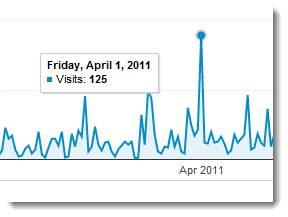
Why? Well, when I first started blogging, I had the same problem that most beginner bloggers have – not many readers. In my first year of blogging, I think the highest number of readers on a single day was about 125. I remember that day as I was very excited to break 100! Bluehost was very reliable, serving up my content with maybe a total of 3-4 outages in the past 2 years. Support was usually very prompt with answers and solutions, and I love their ‘Chat now’ technology – much nicer than message boards only or pay-to-talk phone support.
In the past 6 months however, I noticed a couple of things:
- daily traffic was increasing – woohoo!
- my service was experiencing severe CPU throttling – doh!
To be honest, I wasn’t aware the throttling was occurring, but I did know that the response time of my blog was starting to lag. Average load times were approaching 20-30 seconds. Not good when good sites are loading in 5 seconds or less. And just this past week [again, back in 2012], in getting ready to launch a site re-design for work that sucked in an RSS feed from my blog, the page took more than a minute to draw – b/c of the CPU throttling.
Not good!
In fact my boss asked, why aren’t you blogging on Blogger? Ugh.
I tried a few things to fix the problem:
- I paid for a premium WordPress theme – Themify’s Grido (thanks to @SQLRockstar for the heads-up)
- I installed a couple of WP caching plugins
- I read every WP optimization blog post I could get my greedy little eyes on
However, at the same time I was also getting addicted to WordPress bloggers talking about all the cool things you could do with your blog. As a result I had at one point about 30 different plugins installed. WordPress runs on MySQL, and certain queries running via these plugins were starving for CPU. Plugins that would be called every page load meant that as more people clicked on my site, the more CPU I needed. I’m not stupid, so I eventually figured out that maybe less plugins was better, and was able to go down to just 20. But still, the site was running like a dog.
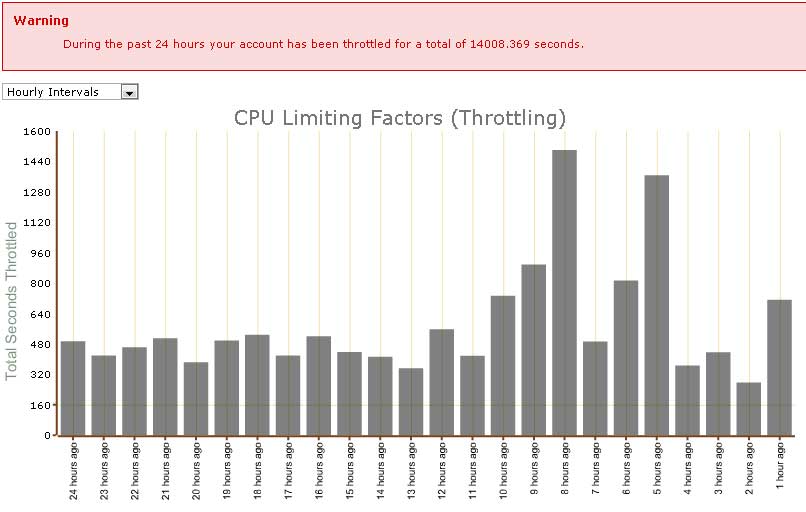
Bluehost runs shared servers. Your site runs on the same box that several hundred (or thousand?) other services are running on. If you take more CPU than they think you should have, they will limit your service by making you stand in line for CPU, AKA ‘throttling.’ This is not bad. This business model allows them to serve many, many users for a very fair price. It works great until, well, until it doesn’t.
I noticed in the last week that for every minute of service, I was being throttled between 60 and 300 seconds. If there were 5 MySQL processes running, then every single one of them were being held in check. The blog visitor notice this as their page requests would take a minute or more to be answered.
Bluehost unfortunately didn’t offer dedicated server hosting, so there was no real upgrade path for me follow and remain one of their customers. So what was I to do? Uninstall every plugin and hope the site sped up? Ask for people to take turns on my blog? I decided to spend my way out of the problem.
Note: Bluehost now offers an upgraded service plan that would probably work OK for me today…
I signed up for service with WP Engine and moved ThatJeffSmith.com
The first 2 months are free, and after that it’s about $29/month to run my site on their system. My math tells me that’s a good bit more expensive than what Bluehost was charging me – to the tune of about 300% more a month. Oh, and I should just say that my blog is a personal blog even though I talk about work stuff here. I’m not here to generate revenue. The hosting money comes directly out of my pocket.
So is it worth it?
It’s totally worth it. Load times have gone from 20-30 seconds to less than 5-11 seconds. No one has ever complained about slow load times. This has directly led, or at least supported the traffic growth on this site, month-over-month since I moved.
I noticed right away that writing posts, uploading pictures, and just using the WordPress dashboard in general was much more responsive. So writing is less of a chore now, which means I have no excuses for not writing on a regular basis 🙂
WPEngine costs a lot more than $29/month now.
I’ve since outgrown the personal plan. I’m now on the Professional plan at $99/month. They cut me a decent break as I pre-pay for a year, so that’s cool. The professional plan is good for 100k visits a month, but I exceed that by a good bit. It’s an extra $1 per 1,000 visits over a 100k…and the response and up-times for my site are still stellar.
I still think it’s worth the money. I see other big-name sites running on WPEngine that generate way more traffic than me, and that’s nice validation for me.
Moving to WPEngine is Easy
I signed up for the service and registered my domain. I did a WordPress Export on the old site and imported it to the new staging site provided by WPEngine. By the way, WPEngine had a staging area for me to play with in a matter of minutes after signing up for their 2 month free trial.
Using a temporary URL to see my new site, I was able to confirm that everything looked mostly OK – I’ll detail the challenges and issues of fixing the content next – but then it was time to ‘flip the switch.’
I updated the IP address that the DNS lookup tables use to route traffic to my new server. In a matter of minutes the DNS servers around the world were updated and it was time to see the new site!
But It Was ‘Broken’
I had never moved a website before, and in my rush to update the DNS, I had changed the records without really finding out what I was supposed to do first. After re-reading the directions provided by WP Engine and following the guidance of their support engineer, I realized I had needed to set the CNAME (Alias) ‘www’ record to point to a different URL than the ‘www.thatjeffsmith.com’ entry I had set. Once corrected the site was up and running in less than a minute.
After the first call to WPEngine’s support team, I already knew I was working with good people. The engineer held my hand and helped me get everything up and running. He even called me from his car to make sure everything was ok.
How WP Engine ‘Hooked’ Me
WPEngine wasn’t my first choice. I had tried and struck out with another provider. They had ranked highly in Google searches, and a few Tweeps recommended them to me. But hours after signing up and I still didn’t have server ready, I was ready to give up on them. They offered no chat or phone support – only mail and message boards. And the message boards were rife with posts about how the service had gone downhill in the past 6 months. To their credit, they did make it easy to cancel, although I did have to do so via email as their website ‘cancel’ button was non-existent. So to say that I was primed for continued disappointment would be an understatement.
Thankfully, WP Engine really was awesome from the very beginning.
Within minutes of activating my WP Engine account I had received my welcome message and directions on how to get started. I was able to see my staged website right away. They also did something very cool before I even got started – they looked at my existing site and told me by how much they could improve its performance.
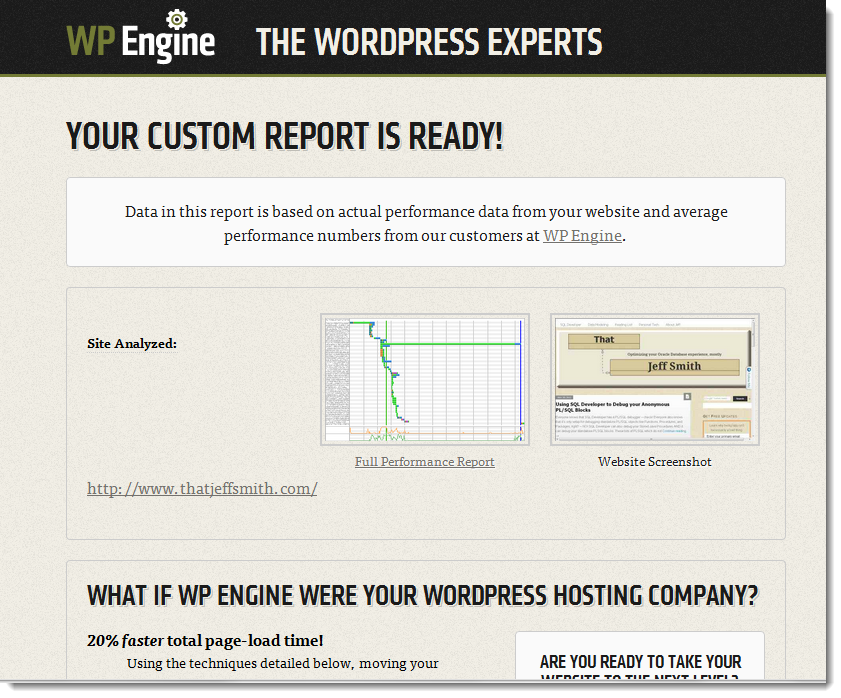
I like this for a few reasons, but primarily I liked their business model. It told me they knew what they were doing, and that they were willing to put their money where their mouth was. This was further evident by their 60-day money back guarantee. And if I understand it correctly, they don’t even take your money until after that 60 day period is over.
After a day, I was welcomed by the WP Engine social media team, and was given the opportunity to subscribe to their newsletter and follow their account on Twitter, @wpengine. I noticed their Twitter team posts regularly very helpful WordPress tips several times a day. It’s not just an account that’s setup for the sake of having a Twitter presence – following them really makes me a better blogger. These little things add up and increase the confidence of my decision to choose them as my hosting partner. ‘Partner’ – that’s a lot nicer word than just ‘service provider,’ isn’t it?
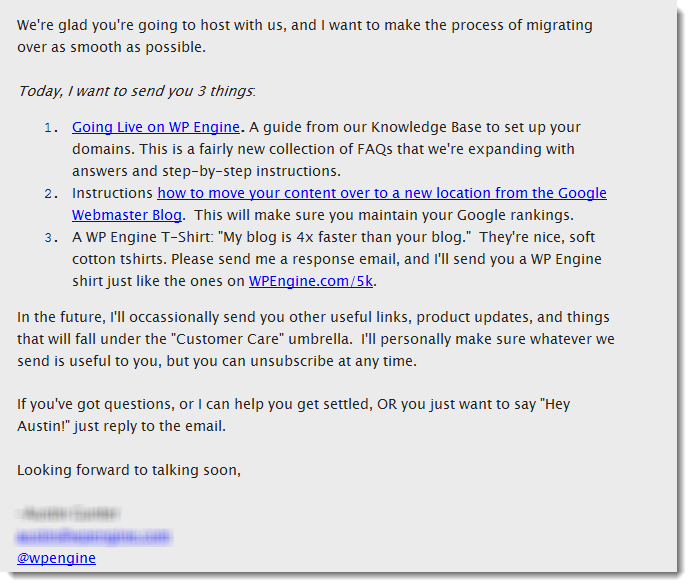
Oh, and they offered me a t-shirt. Don’t ever doubt the power of a ‘free’ t-shirt! How awesome is this e-mail, from a customer perspective? I wasn’t really expecting any of this. Exceeding expectations before I have even handed over a single dollar seems like a pretty good business plan.
Still one of my favorite tees 🙂
But Jeff, You Skipped a Piece Here, Why WP Engine?
I found them on one of those ‘Top 10 WordPress Hosting Services’ list posts, and pulled up their webpage. I noticed they offered a specialized service – they host WordPress installs, and that’s it. Their servers are tuned specifically for running WordPress. They had in bolded text, things like ‘INSANELY FAST. INFINITELY SCALABLE.‘ and ‘LIGHTNING SPEED.‘ And then they offered insurance against hackers and they took care of automatic backups and restores.
And about those plug-ins I tried to speed up my site? The caching stuff – you don’t need that with WPEngine. That kind of tech is baked into their hosting platform. So now I can just concentrate on writing good content. I now run ThatJeffSmith with a total of 24 plugins, none of which seem to be slowing me down.
Today’s Numbers…
So far things are looking MUCH better:
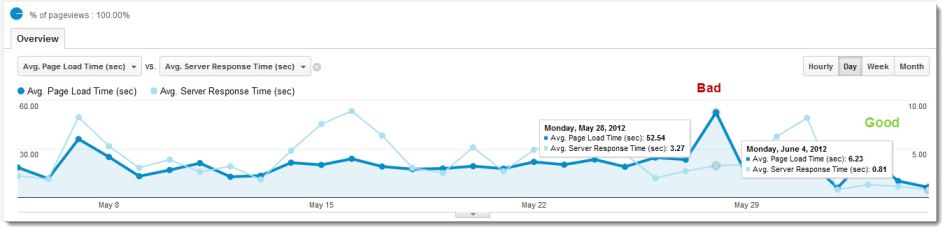
These numbers were using a 1,500 page load sample over the past 30 days back in late 2011…let’s look at today.

WPEngine has won me as a customer ‘for life.’
Their service is outstanding. They address security vulnerabilities before I even get a chance to investigate them. They offer chat support when you’re too busy to pick up the phone. They handle all the traffic I can throw at them and more. They are fun to work with, and are very responsive on Twitter.
They’re simply worth the money.
And now that I truly believe in them, I’m ready to endorse them more officially. However, I do need to pay the bills involved in running the site. I’ll be running ads here to help defray the hosting bills. You’ll also see permanent Ads for WPengine at the bottom of each page.
If you run a WP blog and you want rock-solid site performance, click on that ad and try them out. Yes, they’ll give me a little bit of $ for referring the traffic. That’s how the Internet works these days.


45 Comments
I am facing problems with slow indexing.I am trying to ping all my links & updated wordpress ping list wordpress site.Is there any probelm with hosting?What is the good hosting with for any wordpress website??
I learnt something usefull about hosting.Thanks.
I used to have same problem. Originally from Czech Republic – I tried WP optimised hosting servers…disaster!!!
I’ve got minimum plugins but large Fine Art Photo gallery…Oh boy how many times I heard my WP site is eating up too many PHP processes and it is wrong.
I wonder why they write “WP Optimised”.
After third hosting company, I finally switched to Bluehost since it is recommended by WP itself.
I went for their WP VPS solution. I felt substantial load speed improvement BUT they are located in USA and EuropeUSA connectivity is nightmare.
Unsure, where is problem. I tried traceroute and it always end up on some server in USA…filtering???
I get ping around 170ms when everybody sleeps in USA. Otherwise, 200+ ms. It is killing speed and they don’t offer option of location selection as WPengine.
I’m really tired of moving my site again – last hope is CloudFlare CDN…otherwise I’ll test WPengine despite they do not offer multiple domains and unlimited space in one account.
I had a similar experience with Bluehost, but I moved to InMotion. Here is my story: http://wellnesswp.com/wordpress-hosting-with-bluehost-is-slow/
It’s hard to get the word out about this.
Didn’t realize Bluehost had gone downhill so fast…too bad for them.
Had similar problems and tried similar paths of caching pluggins and such. Over time had more and more frustrations with slow load times. Finally switched to https://www.digitalocean.com and things are working awesomely. It’s SSD backend and starts at only $5 a month.
Did you look at digital ocean? Wonder how it compares with WP Engine.
You said your issue was CPU and maybe Digital Ocean is only addressing I/O speed. Not sure what my issue was but since I went from DreamHost and then to 15minuteservers.com where I still had issues but now on Digital Ocean is satisfyingly fast.
– Kyle
(migration took me a couple of hours due to my own snafus. Had I done it correctly it would have taken 15 minutes probably. Should have documented my migration snafus)
I also had ‘snafus’ – but it was user error. Instead of reading the docs, I just exported by WP database, imported it on the old server, and FTP’d the plugins and htdocs types files over. Biiiig mistake. I basically ended up re-installing every WP plug-in from scratch.
$5/mo almost sounds too good to be true. How many visits do you get a day?
Up to 30K /month – peak around 1400 a day so not in the 100K range.
I did a domain name change and tried to regex substitute in the SQL export. There wasn’t any need. Just need to change two values – siteurl and home. Plus my tar missed .htaccess so that caused problems. Then had a few problems with redirects that I need to setup from the old domain to new.
– Kyle
Hello Jim,
Have noticed you mentioned that WPEngine do not allow particular plugins e.g. Related posts.
You might want to consider paying the annual fee to use the WPMU-Dev plugins, I use them and iThemes and avoid the free plugins which clearly have no support.
These people know how to develop WP plugins, they are behind many of the WordPress books. Their plugins will not be on the WPEngine black-list and BackupBuddy will allow you to easily move to another host if things ever get bad again.
Kind regards,
Yusef
I’m using nRelate’s stuff – and it works great. And no $ – not that I’m opposed to spending money.
Curious if you’re using WPEngine still?
I have been running BlueHost since 2005 and 2007 on this version of a R/E site. Lately I have noticed my Google ranking decreasing while the amount of server errors, in Google Webmaster Tools, increasing. Then after logging into BlueHost today I see my account is consistently being throttled – insert sad face.
I really need to get this problem straighten out as it generates a fair amount of annual sales.
Thanks for your time!
-Toby
I saw the same thing, SEVERE server throttling. However, back then (last year) BlueHost didn’t offer a dedicated server hosting solution. Now they do. So you can upgrade rather than move. That being said, I can’t recommend WPEngine enough. They take care of everything for me.
However, my traffic has grown so much that I’m exceeding the number of visits allowed per month in their personal plan, so I get to upgrade again. A good problem to have I reckon, but I don’t generate revenue with my site…YET.
I know that Google definitely punishes sites with slow response times. If your avg response time in Google Analytics is bad, it’s not going to help your search engine rankings at all.
I’ll have to look into their dedicated server service as moving hosts is so painful. With rankings slipping tremendously there is no choice but to get off a shared server since you rightfully point out that server response time and website up time are critical ranking factors.
Yes, more traffic is the right problem to have especially if you plan on monetizing a blog/website.
This is strange. All the reviews of WP Engine seem great, but then when I go to wpengine.com it takes forever (almost literally) to load, and when it finally does its a really bare bones looking html page with bullet pointed information about their service.
Am I going to the wrong site (wpengine.com) or is something wrong? It seems crazy that such a well reviewed service would have such a terrible web presence themself…
It loads in just a second or so for me, and it’s formatted as expected – not as you describe? Maybe you have a weird cached page or something? I’m on Google Chrome on my Mac Mini…believe me, they’re as good as they say they are.
Huh, strange! It works now logging in from my mac on Chrome, but earlier today I tried firefox on two different Windows computers (a desktop and a laptop) and it was impossibly slow and ultimately unformatted on both. Maybe they don’t get a lot of the Windows/Firefox combination…
May I ask what you think to do with your domain name? Do you plan to renew it with Bluehost again?
Why, are you planning on starting a bidding war with all of us Jeff Smith’s out there? I have it until 2015 and have no plans to change my branding…unless someone comes up with something better 🙂
Oh my God! Never though of that ! Simply I was so in a hurry when migrating to WPengine that I discovered only after that they don’t provide name domain renovation as well. My name domain is registered with Bluehost and I would like to to know if you planned to move to a different registrar. Just this.
Think that I don’t have researched any more about WPengine after reading your article and hurried to migrate. Now I’m a happy WPengine customer, their support was great to help me with a corrupted database and a plugin denying access to admin.
In pingdom tools my speed has increased from 1254 average ( with Max CDN and W3 TC) to 460 ( and have not they enabled CDN for me yet).
So now I’m a free person. Free from WordPress. Thank you.
Yeah, I almost hosed myself on the DNS business. I’m using a free domain server and I’m renewing my registration via Bluehost. I’ll keep it there for the time being, just as it’s there and working…
No, I’m not, just a Linux user since 1998 😉
PS. About other related posts based on the content/comments. Disquss has a nice feature for this (but replaces native comment system from WordPress and needs some work in case you want to keep same design for the comments zone) and relases your host from this stuff.
The problem with “other related posts” is that nobody implemented a caching system for it. Good idea for a better one 🙂
Well, as far as comments go, I prefer to own those 100%, and for related posts, my host doesn’t shoulder the excessive CPU load on those nasty MySQL queries either – nrelate’s servers do that for me 🙂
With Disquss you own the comments, it synchronizes both systems.
For 5 years I’ve dropped any other shared or specialized hosting service.
I’m managing my own VPS (no panel, just from the terminal) and I haven’t had a page load in more then 400ms… I’m scared when I see seconds…
Sounds like it’s working great for you. I need to throw money at the problem and let someone else manage it though. How many pageviews are you averaging over 30 days?
I’m monitoring the server using newrelic.com service, I’m not into Analytics data, but based on newrelic, I have about 120k page views per application (this can be counted from the rpm) and I’m holding right now 12 applications (websites would be…). My costs are < 50$ for all current and on some estimations I think I can manage at least 10 times the current load.
Sounds way cool. I’m guessing you’re not the average blogger that BlueHost and WP Engine are looking to attract and service…
That sounds great, I was also planning to configure my own VPS in one of my desktop using CentOS. But the problem is there won’t be any back-up in case of power outage. UPS will take care of only the desktop, but what about the internet connection. It might be if the website is down for those outage period.
For me, hosting takes away 99.9% of these worries. The .1% that’s left is worried about picking the right hosting service.
The costs for the power consumption for 24/7 desktop/server in house would be a bit more then a basic VPS that would serve well all needed (and have backups in case of disasters)
That’s right. The good is news is that now Bluehost has started offering VPS starting at around $30/month. I might give it a try.
Thing that I didn’t like about WP-Engine’s basic package that starts with around the same cost that it doesn’t support wp multi-site setup.
Interesting. I wish they had that upgrade path available when I needed it. At the same time, I have zero regrets with my move to WPEngine.
I switched to WPEngine a few weeks ago, and I agree — it is super fast. I am getting about 20% more page views, just from the switch. My pages load 5 times faster.
One tiny nitpick — I have experienced a few micro-outages. Maybe three times, the site was down for a few minutes and back up. These weren’t during a maintenance windows. To be fair, they now claim 99.9% uptime, which is what I am getting.
To put it in perspective, it’s not bad at all. FatCow had outages that lasted for up to 8 hours. Outages were also more frequent when I hosted on FatCow.
Since WordPress is a data-driven technology, it’s more fragile than static html pages hosted on Apache or Nginx. I too have worked with web/database technology (Java EE) and when there are surges there’s going to be problems.
So far so good. I am happy with WPEngine. I am monitoring my site. Just set your expectations appropriately. Don’t expect perfection, but they’re pretty damn close. Well worth the money… Indeed, my AdSense revenues have increased (more traffic, more revenue). WPEngine costs 10 times as much as FatCow, but it’s more than 10 times better…
Oh, and working on WP is a joy now. It was frustrating to make edits and have the WP admin tool operate with such latency. With WPEngine, I fly through the admin tool and I am way more productive.
I’m paying the WPEngine premium for my blog which generates $0 income, and never will. That’s how much I value their service. For me, it’s worth it.
The only times I’ve had problems, their support staff went above and beyond my expectations. Truly great service there as well.
I am confused on why WP Engine wont allow caching plugins? Do they have their own caching software on their servers? I thought caching was the be all-end all to speeding up a site.
Thoughts?
Yeah, they do their own, so adding additional 3rd party caching plugins only adds steps to the process of loading up a web page. You get caching with WPEngine out-of-the-box.
Great review! I’m just now looking into WP Engine and it seems to be a good service. That’s interesting about the blacklisted plugins: I’m sure it would be a little frustrating if one of my favorites is not allowed, but I’m sure overall it’s a good policy. I know I’ve had plugins as a cause of slow site loading but it was a pain to test each one to find the problem. Not installing a CPU-sucky (love the term!) plugin in the first place would solve this problem.
Still no regrets from me here on this move, other than that I waited so long to move. I’m getting around 1300 – 1500 visits max a day and the load time is still really good.
Hey Jeff,
Thanks for the review and so sorry the T-Shirt hasn’t made it over to you yet. Can you please email me directly with your size and address and I’ll have one shipped to you first thing next week?
Thanks again for the review and being an awesome customer. Let me know if there’s anything else we can do for you 🙂
-Austin Gunter
@austingunter
Hi Jeff,
You’re migration plan of WordPress seemed a little odd. All you really have to do is copy everything in your root wordpress directory and move it to your new host.
Then export your MySQL database settings, and then import it into your new database. Then open wp-config.php and update the database settings and passwords.
Don’t use WordPress Import and Export functions, or copy half the files across (wp-content) like you did. Copy everything across.
Hope this helped.
Why not use the WordPress Import and Export?
I’m not sure what the proper way to do the move was, but I know that I probably didn’t do it. I hope to never have to move again though!
WordPress Import and Export does not scale to everything that WordPress can hook into. It’s a nice idea, but import/export has a few issues as well.
One time we were doing it on a Multisite conversion and found that, to prevent SQL injections, WordPress import had added forward slashes everywhere an ampersand was typed. In thousands of posts. We still have a few with slashes on one of the sites I own… I’m sure of it.
Apparently i got lucky. If i move again, will definitely do my homework. Thanks fit the insight Chris!
tangentially, I had a blog for over a decade, on Blogger (bad). The other day I was checking out “Living in the Limelight” by Rush on YouTube, and came across a “guitar lesson” about it. I was so impressed with the guy’s work that I wanted to leave little comment of thanks and encouragement. So naturally you have to register — what’s the point of having databases if you don’t have data, right? — and I very uncharacteristically decide to go along. But like a wiseguy I chose “2011” as my “birth year” and once I hit “send” a message from Google appears saying my account was suspended and, lo, my blogs are G-O-N-E.
Of course I’m absolutely beside myself at this heavy-handed, totalitarian-feeling appropriation and handling of my creative effort (of course somewhere along the line I must have unwittingly or begrudgingly signed on to it) yet I attempt to follow the “support” links to restore my account by proving my age. !!! I even agree to the “submit a *credit card*” option for immediate results — so contrary to my instincts for the sanctity of individual privacy. But Google wouldn’t even let me compromise that, because the links were circular and I never could disclose all that information to them.
I’ve resigned myself to the disappearance of my work and decided that I would never again do anything with google. I hope to eventually find another email address. I feel pretty good being “unplugged,” actually. And my resentment of information monopolies is now cast in stone. If I ever were to publish anything online again, it would not be on the servers of Google or anything like them.
It’s an evolution for me. I first started blogging because I got booted from a political forum — and saw all of my posts disappear. I said, “never again.” Now that it’s happened at Google, I may actually write that book.
But anyway I have a question about Oracle so I’d better go find a relevant post to comment on about that.
Wow.
Umm, did you try contacting Google to have your blogs restored?
What was your blog URL? I would use the WayBack Machine or Google ‘cache’ to pull up my posts and try to resurrect them. I hope your horror story serves as a warning to others that they need to protect their work by backing it up locally. Does Google allow you to download your posts locally?
I definitely enjoy owning my domain and my content – but I still try to back it up on a regular basis. Actually my new provider claims to do the backups for me, but I need to look at doing independent backups ‘just in case.’
So what’s your ‘question about Oracle?’ Maybe I can give you a jump start in the right direction!